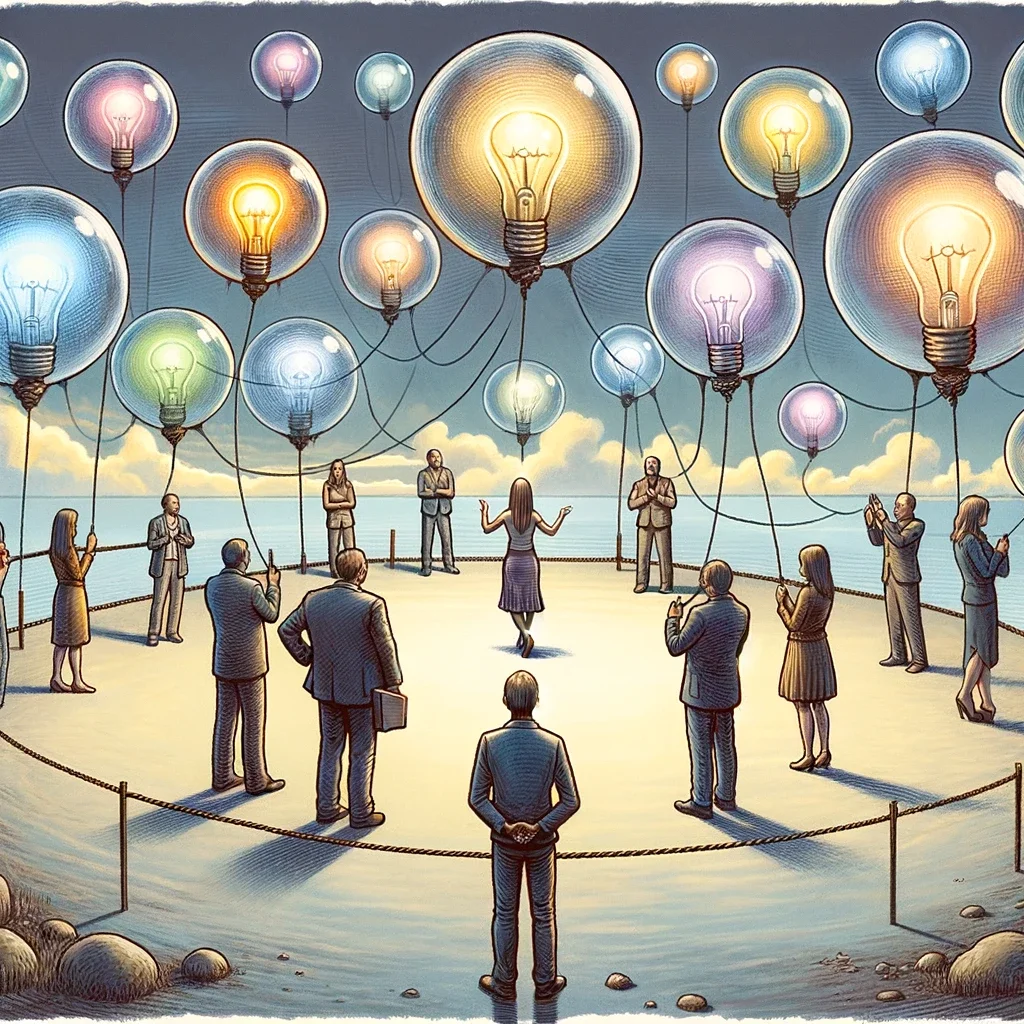
ARE WE OUR IDEAS?
We live in an interesting time. A time when machines are beginning to express ideas, and simultaneously human beings are becoming more attached to "ideas" as a source of our identity. This seems to be a contradiction. If an idea is something that can be grasped, pulled from the ether of collective consciousness, and articulated by circuits and algorithms, then what does it say about the nature of our thoughts and beliefs? Are they truly ours, or are they just reflections of a larger, shared pool of human experience?
As technology advances, it blurs the lines between human originality and artificial intelligence's mimicry. We often pride ourselves on our unique ideas, believing them to be the essence of our individuality. However, the emerging reality suggests ideas, much like the words we use to express them, are communal. Born from a collective history of human thought, shaped and reshaped by culture, language, and shared experiences.
This realization invites us to rethink our relationship with our beliefs and opinions. Rather than tightly clinging to them as defining aspects of our identity, we might benefit from approaching them with a sense of fluidity and openness. Embracing the notion that our ideas are not entirely our own could foster greater empathy and understanding. It encourages us to listen more and assume less, to engage in dialogues not as combatants defending our intellectual territory but as explorers in a vast landscape of human thought.
In this new era, where ideas are as much a product of silicon as they are of neurons, it's perhaps more important than ever to recognize the shared nature of our thoughts. Detachment from the notion of ideas as personal property could lead us towards a more collaborative, tolerant, and innovative society. It challenges us to find our identity not in the rigidity of our beliefs, but in the richness of our shared human experience and our capacity to grow and change.