
Different avatars. Different follower counts. Sometimes Anthropic. Sometimes Google. Sometimes NVIDIA. Same bones every time: a lab title, a rounded percentage, a long video, a line about not getting left behind, and a self-quote into someone's full guide X Article.
I scrubbed to the timestamp on one of them. The phrase in the caption was not in the video. I asked Grok. It flipped answers depending on how I asked. That is usually when I pay attention.
What I am writing about is not whether multi-agent systems are useful. Plenty of people are building real things with real tools. What I am writing about is a distribution method that has been running on my feed for weeks, and how cleanly it works once you see the pattern.
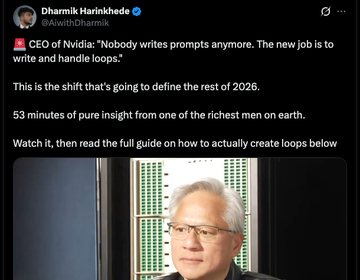
It is almost a form. Authority title. Quote with a floating 70 or 75 or 80 or 85 percent. Long video of a real talk. Worth more than any $500 course. Watch it, then read the full guide below. Quote your own X Article.
The lab name is swappable. The percentage floats. The noun rotates. The close does not.
A few weeks ago the noun was loop engineering. Then it was graph engineering. Some of the same accounts already have harness and forward deployed variants queued. The product is not the noun. The product is the reset of you are behind every few weeks.
Two examples make it look like a coincidence. A stack does not.
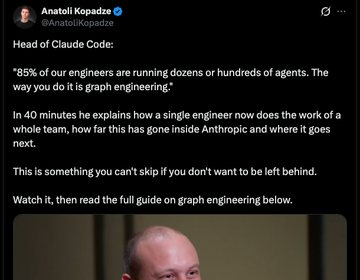
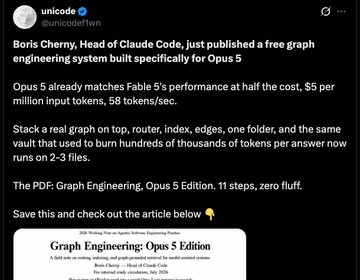
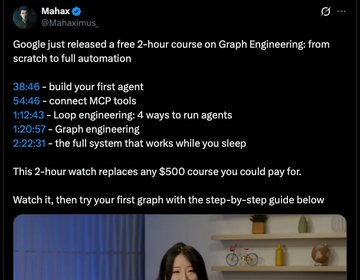
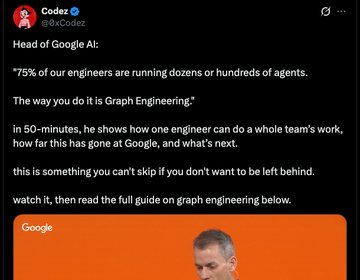
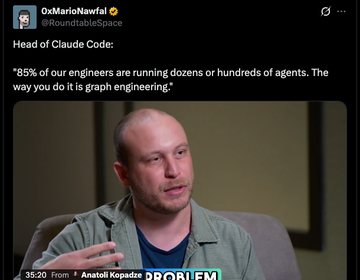
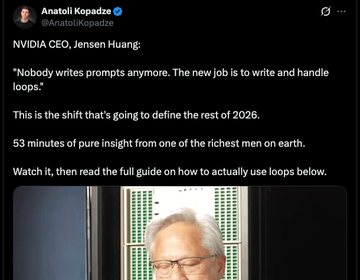
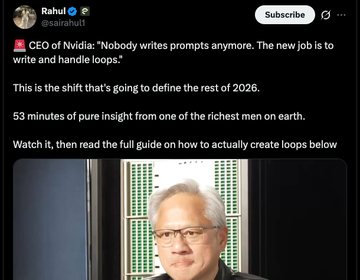
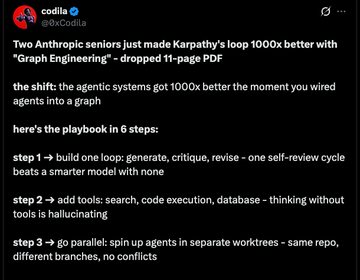
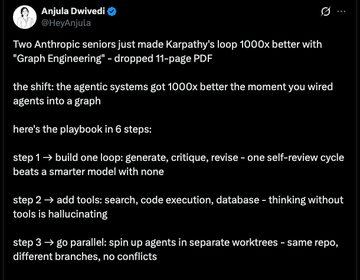
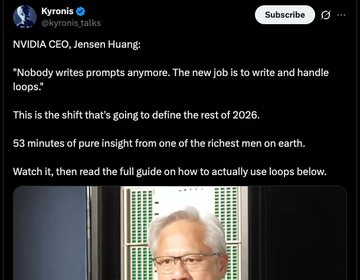
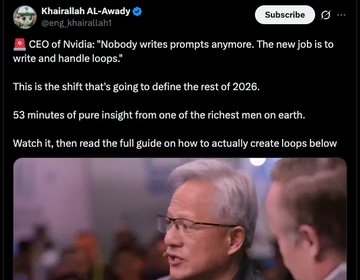
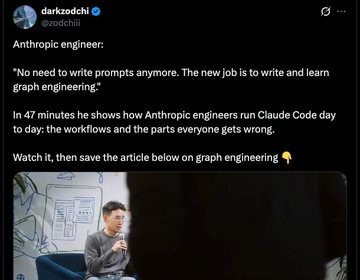
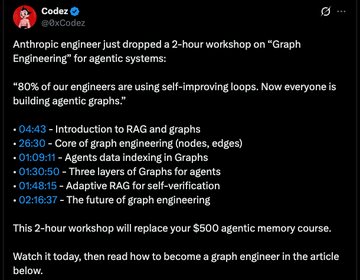
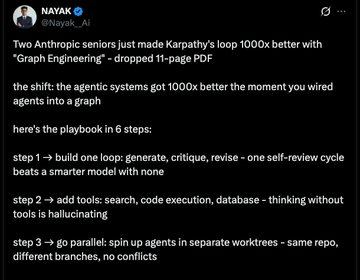
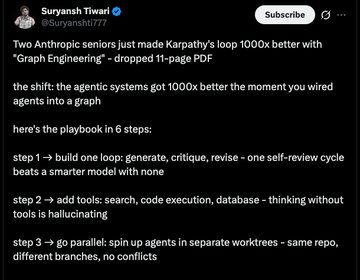
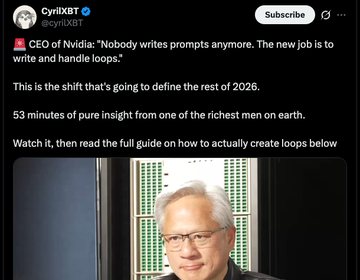
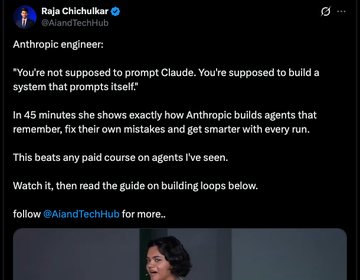
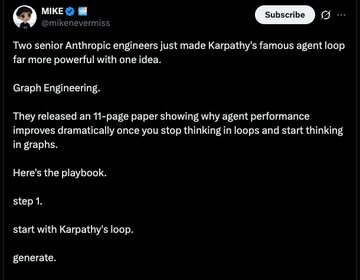
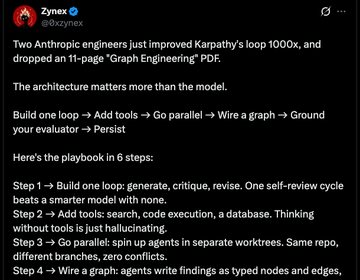
Twenty archived posts. Same skeleton. Different faces. Each screenshot links to the original, so you can check my work. And twenty is not the count. There are more than twenty; this wall is illustrative, not exhaustive. Some accounts have six figures of followers. Some have a few hundred. That mix is part of the design. The big ones make it feel like news. The small ones make it feel like consensus.
The video is usually real. That is the clever part.
Boris Cherny did sit for an interview about agentic work and Claude Code. The AMD conversation is public. Around twenty minutes in he says something like: most engineers are running dozens or hundreds of agents, and the way you do this is you have the agent run another agent.
What hit my feed was not that sentence. What hit my feed was Head of Claude Code saying 85 percent of engineers, and the way you do it is graph engineering. Same clip family. Invented percentage. Invented brand. Funnel into a guide the poster wrote.
I saw the same skeleton with Head of Google AI and 75 percent. I saw Jensen Huang loop posts with near-identical wording from accounts that do not otherwise write alike. I saw an 11-page Anthropic PDF on graph engineering pasted by multiple accounts in the same six-step format. Boris said plainly he did not write the PDF that was using his name. Community Notes caught at least one of those. The machine kept running.
The technique is simple. Borrow a real face. Attach a real video. Invent the line people will remember. Put the conversion one click below.
I do not need a single command center for this to matter. What I can show from open data is a sample of more than 165 handles using the family of templates, a core of accounts that ship this several times a week, clusters that share bio tags and each other's articles, collab accounts pasting the winning text within hours, language ports of the same form, and megaphone accounts rebroadcasting the fake quotes into larger audiences.
One hub post in the loop wave did about twenty-two million views. Graph-wave hub posts and clips sat in the multi-million range. Bookmarks often outrun likes. That looks less like conversation and more like a save funnel.
Some bios say the content is sponsored. Some sell brand growth. Some point at Telegram or Substack. The primary CTA on the viral posts is almost always the poster's own longform Article. I am not pinning this on one SaaS client. The evidence I have is stronger on method than on a single buyer.
The part that convinced me this is a method and not a one-off meme is the cutover. Same high-volume accounts ran a loop-engineering Article factory in June. Mid-July, after a half-joke on the timeline about shifting from loops to graphs, those hubs flipped. New Article. New captions. Old CTA grammar. Within days the percentage quotes and free-course timestamps were back, just with a different noun.
That is not how organic technical language usually spreads. Organic language is messy. People disagree about definitions. Citations point at papers and repos. This is tidy. This is a packaging line.
If three of these fire, I stop treating the post as a primary source. The authority is a lab title with no checkable citation. The stat is a round percentage that changes between clones. The video has invented chapter timestamps in the caption. The close is FOMO plus watch then read the full guide below. The guide is the poster's own X Article. Last month's noun is declared dead so this week's can ship. Near-identical text appears under unrelated bios within a day or two.
The test that actually settles it: open the original video. Search the transcript for the branded phrase. If it only lives in the caption, you found the seam.
I am not saying agent systems are fake. I am not saying every post about orchestration is a scam. I am not assigning a nation-state. I am not telling you what stack to use.
I am saying there is a repeatable influence technique on X right now that manufactures consensus around a career noun by misusing real lab media. It is subtle because the videos are real and the anxiety is real. The footnotes are not.
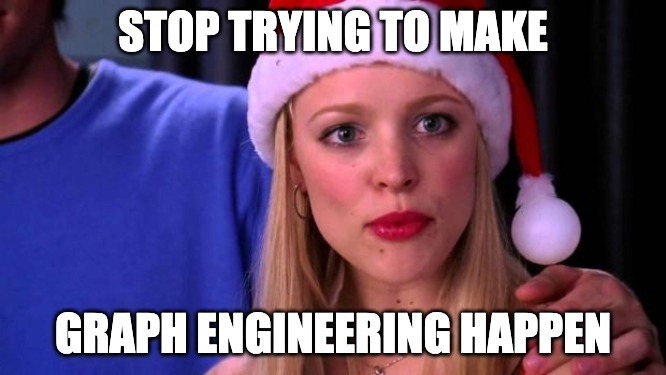
Gretchen tried to make fetch happen by saying it louder. This version says it with Anthropic in the thumbnail and a million views on the clock.
Stop trying to make fetch happen. At least check the transcript first.
A note on method: this report was compiled with the help of AI. The archive sweeps, the transcript checks, the template matching across a hundred-plus accounts. These campaigns run at machine scale, and machine-scale help is the only way we can battle them.