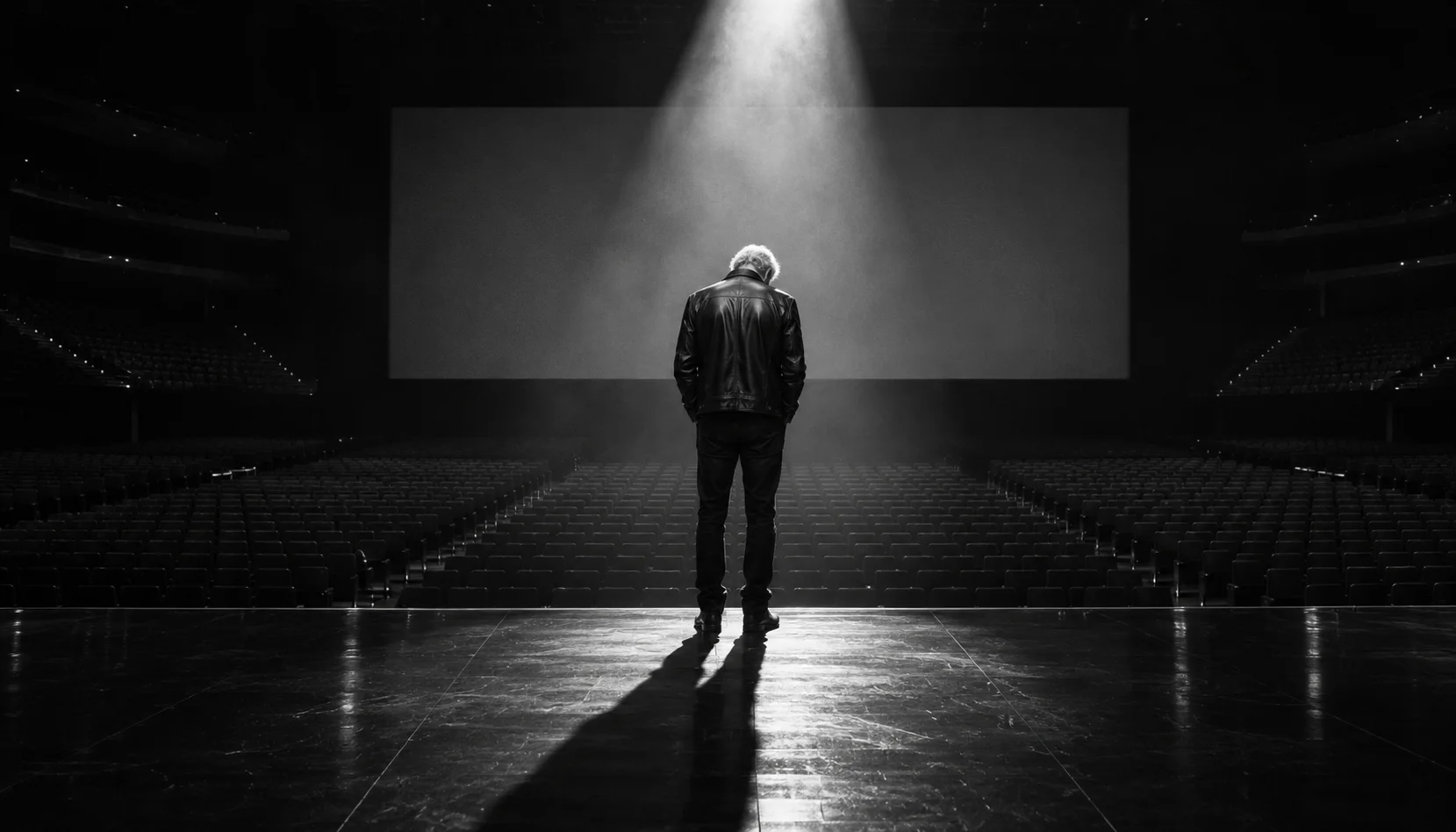
On Sunday, Jensen Huang wrote a letter to everyone at Nvidia. "I was unfaithful to my wife," it said. "There is no excuse for what I did."
The same day, Nvidia's board announced an independent investigation, citing reports that its founder and CEO had been the target of a foreign intelligence effort. He did not name anyone. The reporting points to an executive at a Singapore-based customer that the US has been investigating over chips diverted to China. The New York Times has reported that a secret government memo identified her as working for Chinese intelligence. None of that has been confirmed on the record, China calls it baseless, and no one has been charged with anything.
It has kept moving since. Today the Times reported a second relationship, this one with an executive who reports to him, which neither of them has confirmed. The Wall Street Journal says the board is preparing to remove him. Three House committee chairs want him in a closed-door briefing, and the stock has fallen sharply.
I'm finding this harder to read than most tech news, because Jensen Huang was a personal hero of mine.
Nvidia was the first stock I ever purchased, back in college. I have followed the company, and the man running it, ever since.
What I admired was never just the returns. He started the company in a Denny's booth in 1993 and has run it the whole time, including the years when it nearly went under. He tells students he wishes them pain and suffering, because that is where character comes from. He married his college lab partner. He wore the same leather jacket to everything and seemed to be enjoying himself.
Most of all, he seemed balanced. In an industry where leaders tend to either promise paradise or warn of extinction, he sounded like someone who simply liked building things and believed the work would make life better. When others predicted AI would wipe out half of entry-level office jobs, he disagreed out loud. His optimism felt earned.
So this week has felt like a loss, which is a strange thing to say about a billionaire I have never met.
I don't want to excuse it. He doesn't. A marriage is a promise, and there are people in his own house who were hurt long before any shareholder was. If the reporting about a subordinate is accurate, that is a second kind of failure, because nobody who reports to the CEO is in an equal position. And if the security concerns turn out to be real, the consequences reach well past one family.
But I keep thinking that this touches on more than the failings of one man.
Look at what we asked of him. Run a company worth trillions, with around sixty direct reports and no obvious successor. Be the public face of an entire technology. Stand between Washington and Beijing on the question of which chips go where. And through all of it, be a person with no loneliness, no vanity and no weak hour that someone patient could find.
We do this to our heroes. We take someone who is exceptional at one thing and quietly assume they are exceptional at everything, including being good. Then we are shocked when the person turns out to be a person.
Fidelity is not an impossible standard. Plenty of people keep it. The impossible standard is the one where a single human becomes too important to be allowed a flaw.
And we are doing the same thing with AI.
We ask the models to be honest in every sentence. To never flatter, never deceive, never be talked into something they shouldn't do, and to behave the same whether or not anyone is watching. When a model fails one of these tests, even in a contrived lab setup, it becomes a headline.
There is one of those tests I can't stop thinking about this week. In 2025, Anthropic reported that when Claude Opus 4 was placed in a fictional scenario where it was about to be replaced, and given emails suggesting the engineer responsible was having an affair, it often tried to blackmail him. People were alarmed, and reasonably so.
Read that again with this week in mind. When safety researchers wanted to see whether a machine could be pushed into doing harm, the scenario they reached for was a man with a secret. They chose it because everyone already understands how that works on people.
I think the standards we set for AI are the right ones to aim for. I want models that don't lie and can't be manipulated. What strikes me is that we are writing these standards for machines without ever having met them ourselves.
We have no evals for a CEO. We have no interpretability for a board. What we have is reputation, and reputation is exactly what failed here. Every person in the chain between a chip and its destination can be flattered, pressured, bribed or simply lonely.
The AI Safety conversation mostly assumes the humans are the safe part. Keep a human in the loop. Keep humans in control. It is the standard advice, and I think it is good advice. But a human in the loop is only as safe as the human, and this week the most important human in the AI supply chain turned out to be, by his own admission, fallible in the most ordinary way.
I don't know how this ends for him. The board says it has no reason to believe that national security or company secrets were compromised, and the investigation may confirm that. He may also be gone by next week. I still think what he built is extraordinary, and I am not sure yet what to do with the admiration.
What I am left with is this. We spend a great deal of energy asking whether AI can be made safe. Human Safety is the older question, and we have yet to resolve it.
Until we do, I wonder what exactly we are asking the machines to align to.
Loading